Skip to Content


Segal McCambridge secured a defense verdict for Daimler Truck North America in Hunter v. Daimler Truck North America LLC following a two-month trial in the Waterbury Superior Court of Connecticut (C.A. No. UWY‑CV18‑6040217). After roughly two hours of deliberations, the jury delivered the verdict in favor of the defense.
Summary of the case
On April 22, 2016, the plaintiff, Schley Hunter, was a front-seat passenger in a HINO box truck driven by his co-worker, Howard Dozier. Dozier fell asleep at the wheel and lost control of the box truck, which came to rest on Route 8 North in Waterbury, on its side, blocking both lanes of travel, with the undercarriage facing oncoming traffic. Minutes later, a 2016 Freightliner Cascadia driven by Larry Shunk approached from the south and struck the box truck while the plaintiff and Dozier were still inside. The impact caused catastrophic injuries to the plaintiff, who was rendered permanently paralyzed from the waist down with significant limitations to mobility in his upper extremities.
The plaintiff alleged that the Freightliner was defective and unreasonably dangerous for lacking a forward-collision warning under the Connecticut Product Liability Act. Representing Daimler Truck North America, the Segal McCambridge trial team contested liability, arguing that the Freightliner was not defective without the forward-collision warning, that the plaintiff had failed to establish a reasonable alternative design, and that even had the Freightliner been equipped with a warning system, the harm from the accident would not have been mitigated. The defense was grounded in contemporaneous engineering documentation, testing data, and evidence of compliance with applicable industry and regulatory standards. After the full presentation of evidence and arguments, the jury returned a defense verdict, finding that the plaintiff did not meet the burden of proof under Connecticut law.
From the outset, the defense focused the jury on the accident facts, science, and engineering. The team presented design records and testing protocols demonstrating that the Freightliner met or exceeded the benchmarks in place at the time of manufacture, while cross-examination of plaintiff’s experts highlighted methodological gaps, missing and misleading testing results, and the lack of a tested and proven alternative design. Targeted motion practice narrowed the evidentiary field by limiting cumulative or speculative opinions, and the court admitted key defense evidence, such as evidence of negligence of the box truck driver and the consortium plaintiff’s post-accident purchases of several medium-duty trucks, which were not equipped with forward-collision warning systems.
What does this verdict signal for product liability in 2026?
This verdict resonates beyond a single courtroom. In Connecticut design-defect product‑liability litigation, particularly cases involving complex automotive systems, the decision underscores that plaintiffs must present scientifically reliable, case-specific expert analysis that establishes that a reasonable alternative design is feasible and would have reduced the harm resulting from an accident. Jurors credited robust compliance and engineering evidence, reinforcing the strategic value for manufacturers of maintaining rigorous design documentation, safety reviews, and test data. The court’s constraints on misleading expert testimony offer a practical roadmap for motions in limine and expert challenges in similar cases, and the outcome is likely to influence valuation and settlement dynamics across parallel dockets where defect mechanics and causation are contested.
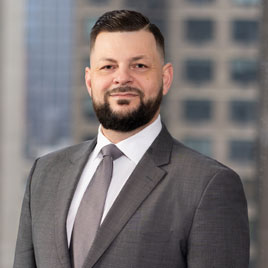
“We are grateful the jury carefully evaluated the engineering and accident fact evidence and the law, and we are proud to have vindicated our client’s commitment to safety and quality,” said Anthony J. Sbarra, Shareholder at Segal McCambridge, who co-led the trial with Webster Szanyi LLP. “This result reflects the importance of a careful and understandable presentation of both the lay witness case and the expert case in design defect matters.”
Segal McCambridge / Webster Szanyi LLP Trial Team
Sbarra was assisted by Associate Anthony D. Cassetta, Paralegal/Court Tech Henry Lopez, and Paralegal Rachel Sherr at Segal McCambridge and secured DTNA’s first-ever ADAS trial verdict in the jury trial. Sbarra co-led the trial with Thomas S. Lane, Managing Partner at Webster Szanyi LLP, and Steven Hamlin, Partner at Webster Szanyi LLP.
Segal McCambridge is a national litigation firm with a deep bench of trial lawyers handling complex, high-stakes matters across industries. Learn more at www.segalmccambridge.com.